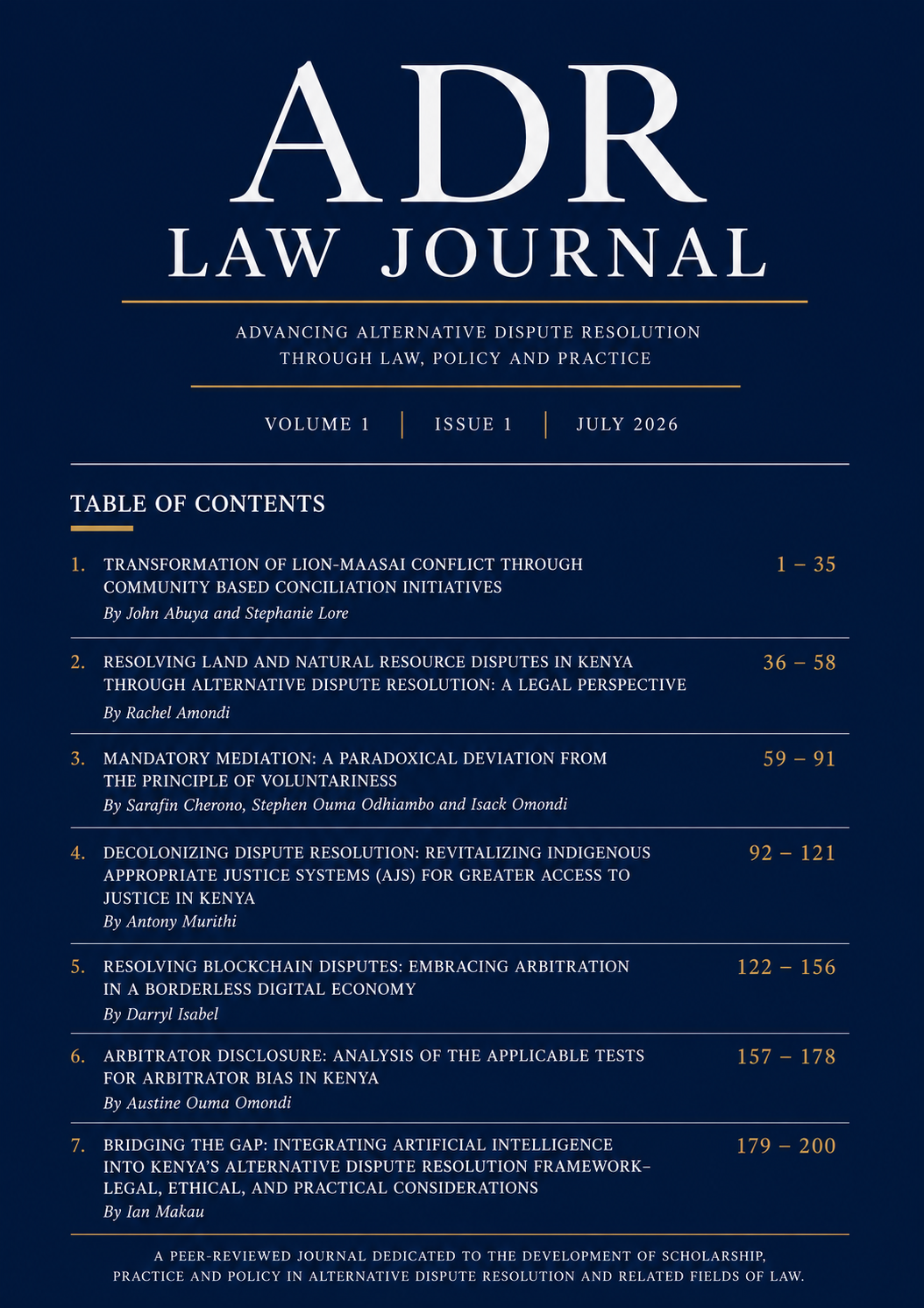
MANDATORY MEDIATION: A PARADOXICAL DEVIATION FROM THE PRINCIPLE OF VOLUNTARINESS
Article Sidebar
Main Article Content
Abstract
As justice teeters on the precipice of procedural paralysis, the fascinating appeal of mandatory mediation arises as both a panacea and a paradox, providing a vision of efficiency that at the same time puts free range holiness at risk. This article examines rigorous studies of conceptual and operational tensions embedded in the institutionalization of mediation as mandatory legal requirements. Traditionally, the reconciliation of a party’s mutual architecture, confidentiality, and autonomy is respected when it is stipulated in the law and raises urgent questions about its reliability, legitimacy and validity. Through doctrinal and comparative analyses in Florida, Italy and the UK, the study questions whether coercion promotes true justice or simply promotes surface level compliance. It shows risks such as weakening neutrality, forced participation, and uncertain enforcement of outcomes. Ultimately, the paper argues that mandatory mediation may facilitate the burden on the court and improve access to dispute resolution, but must remain rooted in fairness, respect and genuine dialogue. Instead of treating mediation as a procedural shortcut, the study calls for thoughtful frameworks that keep it “human”, ensuring that its transformative potential is not lost in pursuit of efficiency but used to rebuild relationships, one conversation at a time.